
Dial-a-ride software for UK schemes
Dial-a-ride trips don't run to a fixed timetable. OpenCommute is a dial-a-ride booking system that keeps the diary, the drivers, the fleet and the invoices in one admin panel.
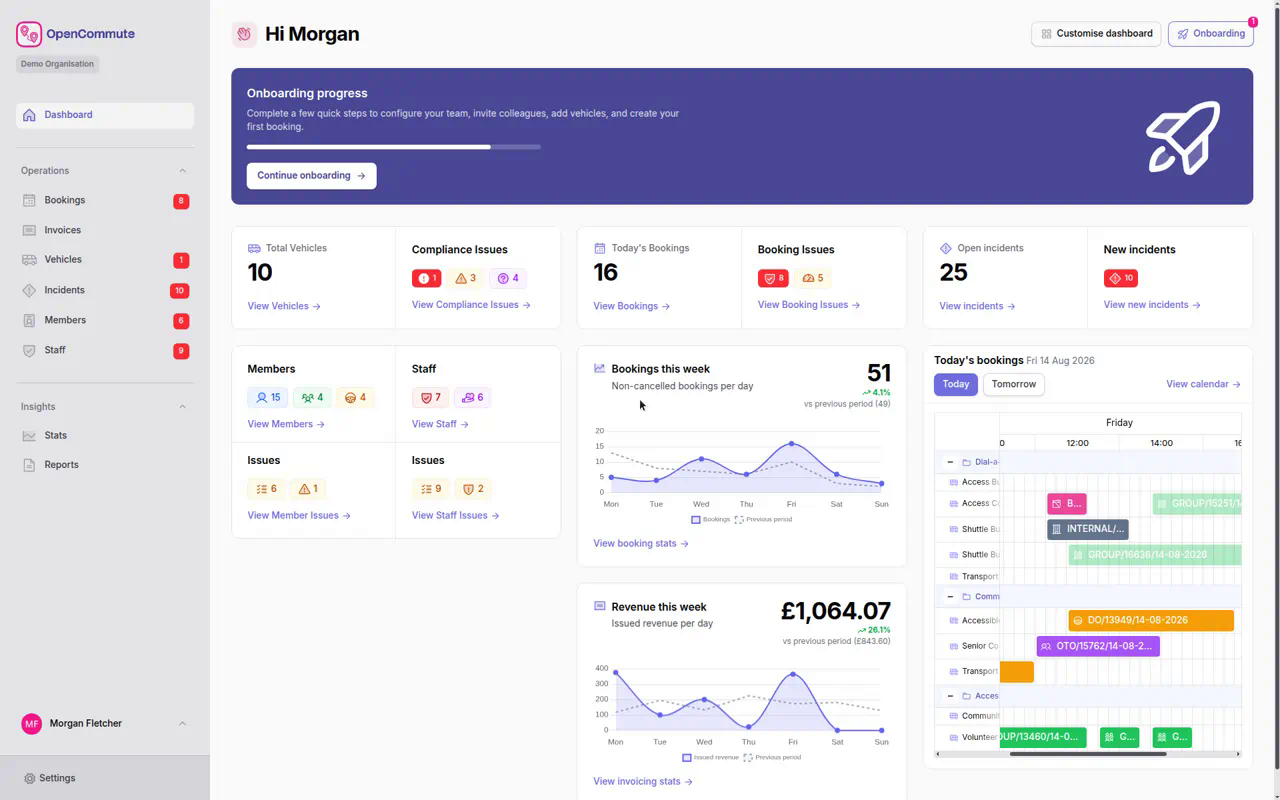
Shared routes on the booking form
An open booking is a shared route and a passenger list. One-to-one trips stay in draft until a driver is assigned, and Find availability can search for a free vehicle and time first.
What dial-a-ride software needs to do
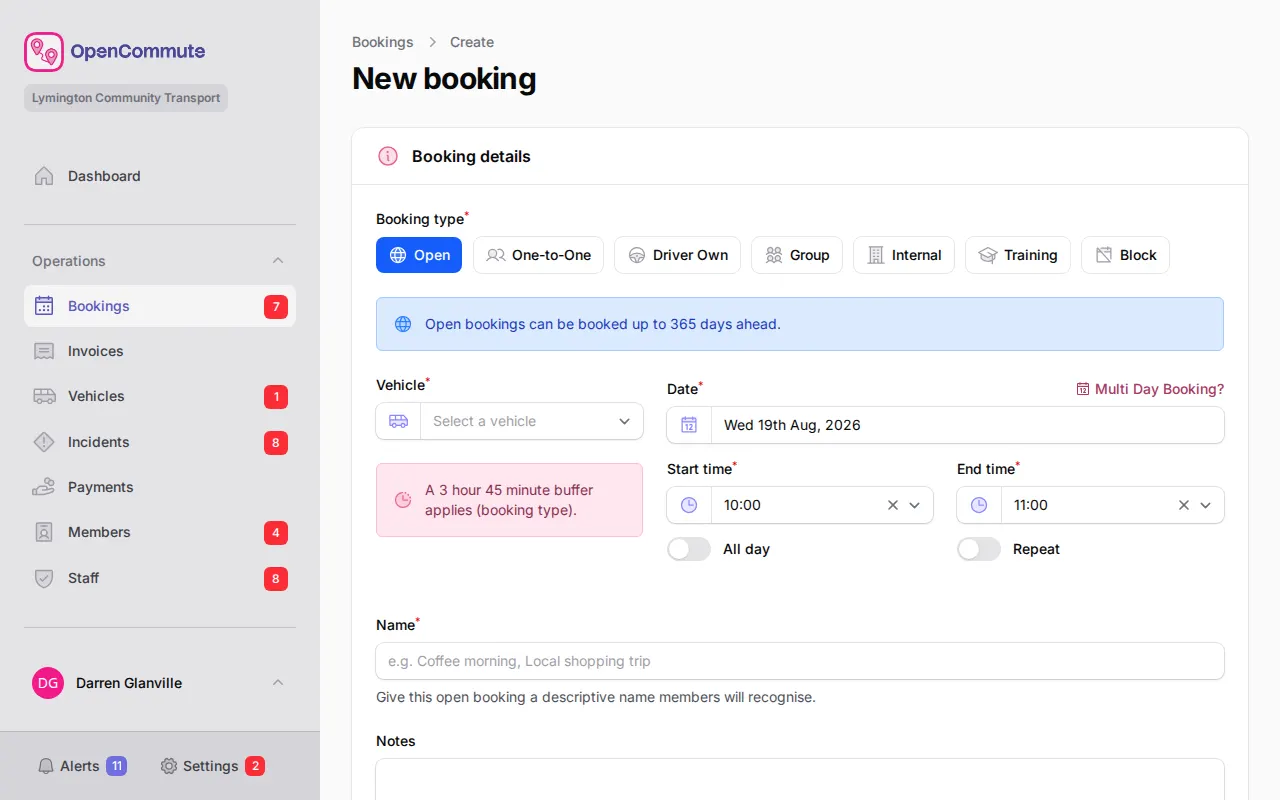
Dial-a-ride is demand-responsive transport. Passengers ask for a journey and the scheme fits it into the day, often on an accessible minibus shared with other passengers. That makes the diary harder to run than a bus timetable. You're juggling requests, vehicles, drivers and return trips at the same time. Good dial-a-ride software keeps all of that on one screen, so coordinators can see what's free and what's booked without ringing round.
How bookings work in OpenCommute
OpenCommute treats a shared dial-a-ride run as an open booking: a planned route with stops and a passenger list on one vehicle. For a single passenger going door to door, use a one-to-one booking, which stays in draft until a driver is assigned. Before you book, Find availability searches for a free vehicle and time. Buffers keep a gap between jobs (15 minutes to 4 hours), set for the team, per booking type or per vehicle. Regular passengers can be booked weekly or monthly in one go, with clashes skipped or saved as drafts.
Drivers and passenger assistants
Assign staff drivers or volunteer drivers to each trip, plus passenger assistants where the journey needs one. The same driver can't be saved onto overlapping trips, and saved weekly hours stop a trip being assigned outside someone's availability. Licence checks, DBS and qualifications such as MiDAS sit on each person's record, with warnings before they expire.
Keeping the minibus fleet road-ready
Each vehicle record holds MOT, tax, insurance, maintenance, safety check, service and mileage check dates. You choose which checks are required. Expired, expiring and missing records show on the vehicles list and in alerts, so a lapsed MOT is flagged before the minibus goes out.
Invoicing passengers and groups
Create the invoice from the booking once the trip is done. Open bookings that charge members can raise one invoice per passenger. Members can pay by card through Stripe or by Direct Debit through GoCardless when connected, or you can record a manual payment.
Reports
The Mileage report shows recorded and billable miles by vehicle, booking type and driver. Booking occupancy shows time used and seats filled per vehicle. Neither produces a ready-made BSOG claim. The mileage figures are there for a team preparing a return. See the reports overview.
Passenger self-booking
Passengers can't book online yet. Coordinators book for them in the admin panel today, and a member app is coming soon.
More of the admin panel
-
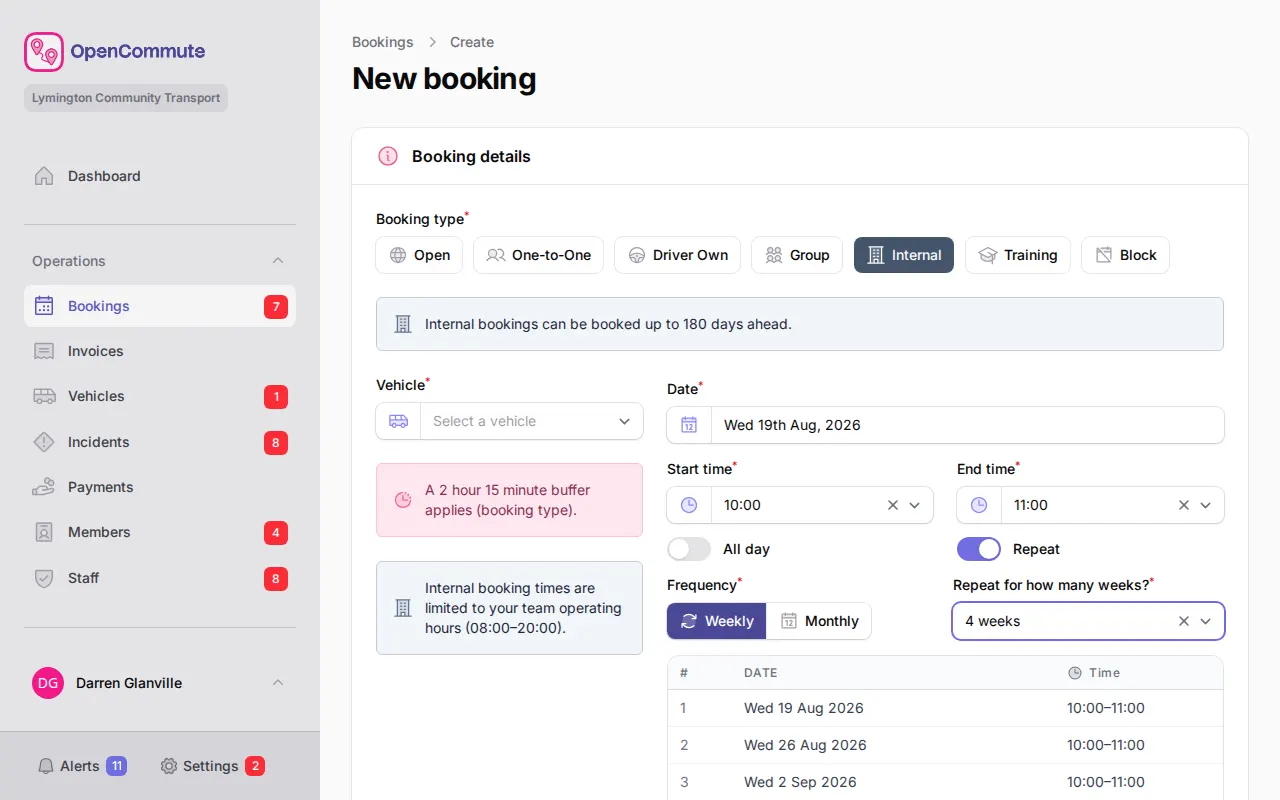
Recurring trips
Repeat weekly or monthly, preview the dates, and skip clashes or save them as drafts.
-
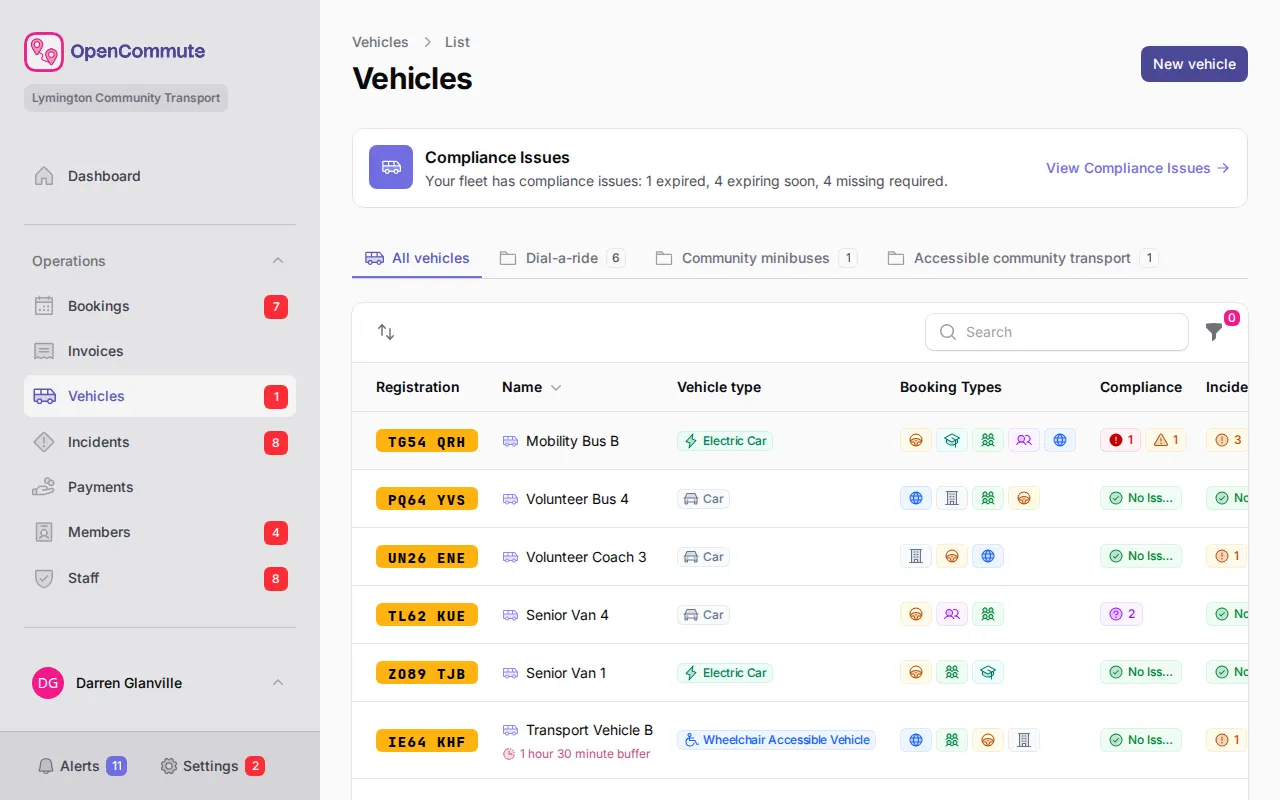
Fleet and MOT dates
MOT, tax, insurance and the other checks, with overdue vehicles highlighted on the list.
-
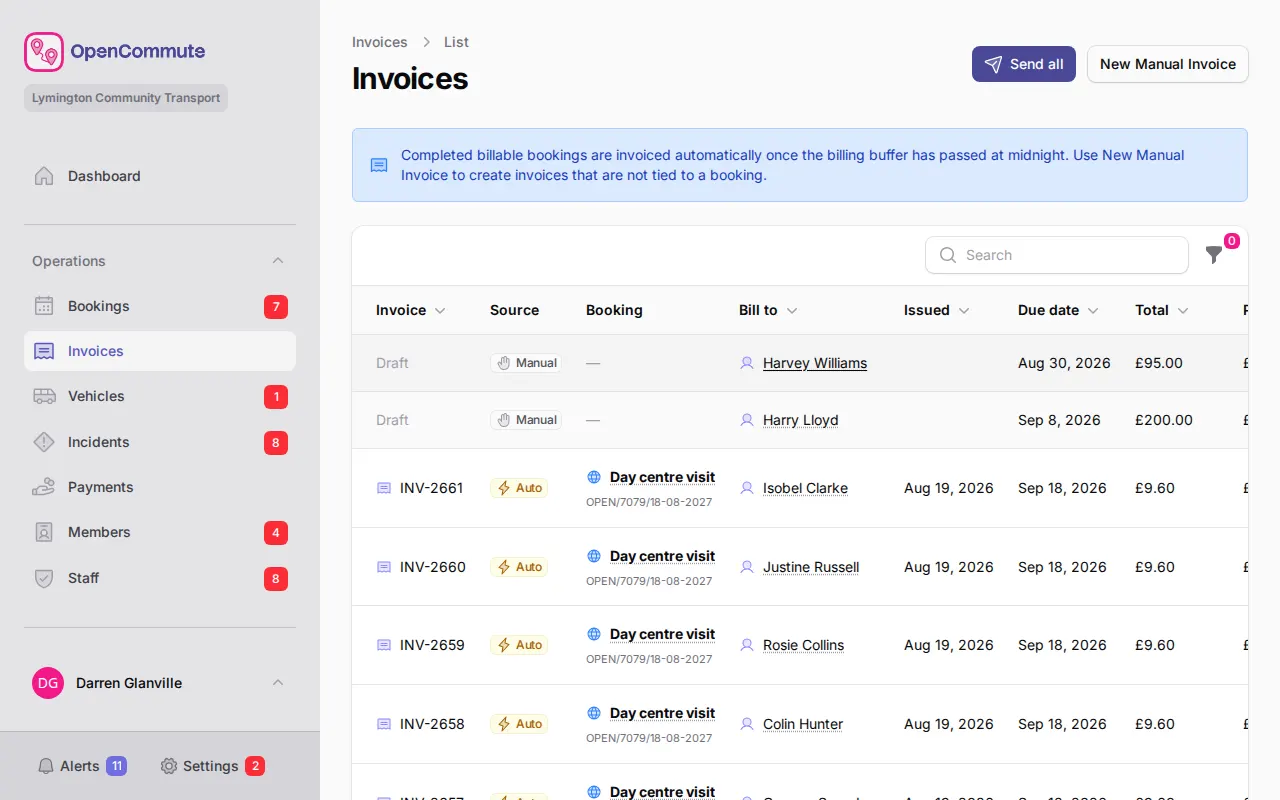
Invoices from the diary
Create the invoice from the booking. Open bookings can invoice each charged passenger.
Also on the diary
-
Buffers between jobs
A team default, a gap by booking type, or a vehicle override. 15 minutes to 4 hours, in 15-minute steps.
-
Volunteer drivers
Listed first on one-to-one trips. Request emails store accept and decline on the activity log.
-
Return trips
Reverse booking swaps pickup and drop-off and places the return after the original plus the buffer.
Who it's for
Dial-a-ride and community minibuses
Shared routes and door-to-door lifts for UK schemes.
Coordinators and volunteer organisers
The people who run the diary from the admin panel.
Mixed diaries
Group hire and blocked vehicles, still on one calendar.
Questions about dial-a-ride software
Yes. Open bookings are shared journeys on a planned route, which is how OpenCommute models dial-a-ride. One-to-one bookings cover door-to-door trips, usually with a volunteer driver. Both types sit on the same calendar.
The diary covers requests that are not a fixed timetable: shared open routes, door-to-door one-to-one trips, and a search for a free vehicle and time. Group hire, internal use, training, and blocked vehicle time stay on that diary too.
Yes. Repeat creates a weekly or monthly series from the first schedule, with a preview of the dates. Clashes can be skipped or saved as drafts. You can later change or cancel one date, or the rest of the series. See recurring bookings.
Yes. Vehicle records hold MOT, tax, insurance, maintenance, safety check, service, and mileage check, each with a due date. You choose which checks are required. Expired, expiring, and missing records show on the vehicles list. See vehicle compliance.
Create the invoice from a billable booking. Open bookings that charge members can raise one invoice per passenger. You can email it, take card or Direct Debit payments when Stripe or GoCardless is connected, or record a manual payment.
A new organisation gets a 28-day free trial and no payment is required to start. You can invite platform users and try bookings, fleet tools, and invoicing before you choose a plan. Start a free trial.
It's software for taking and scheduling demand-responsive journeys. In OpenCommute, shared runs are open bookings with a route and a passenger list, and door-to-door trips are one-to-one bookings, all on one calendar with drivers, vehicles and invoices.
Not yet. Coordinators make bookings in the admin panel today, and a member app for booking and payments is coming soon. You can try everything else with a 28-day free trial, no payment needed.